
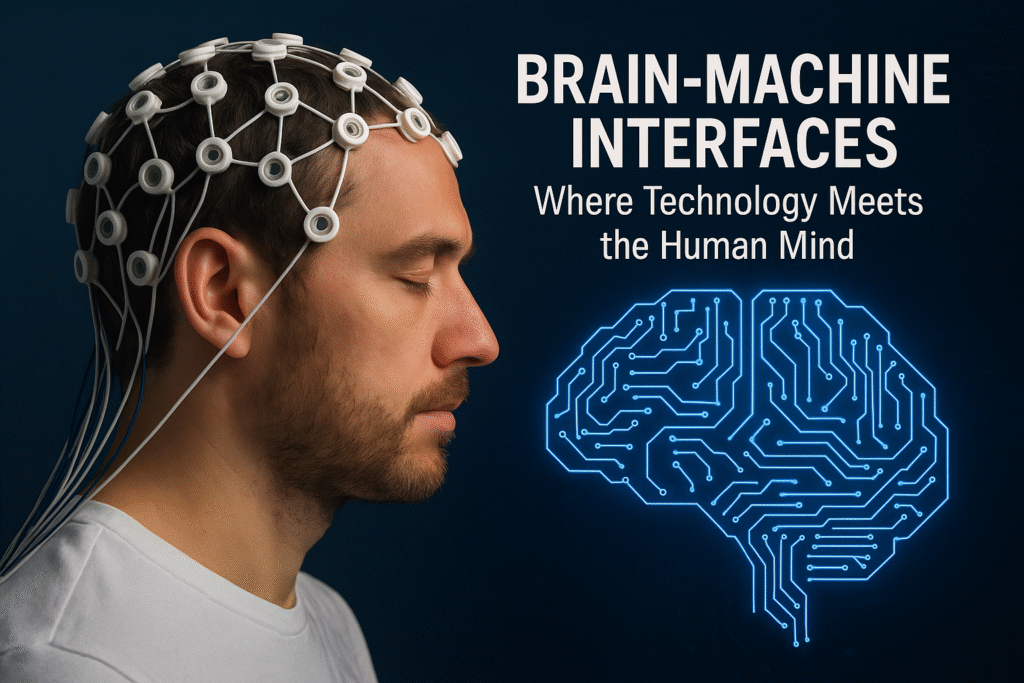
What if your thoughts could control a computer? Or a robotic arm? With Brain-Machine Interfaces (BMIs), this is becoming reality. Neural implants are now being used to restore movement in paralysis patients, ease symptoms of Parkinson’s disease, and even allow communication for those unable to speak. But how far can — and should — we go?
Can a chip in the brain truly understand human thought? These implants detect and decode brain signals, translating them into commands. That opens doors to groundbreaking treatment—but also to uncomfortable questions. If machines can read your brain, who owns your thoughts?
Would you trust a computer with your mind? As BMI technology advances, ethical concerns grow. Privacy, consent, and the potential for mental manipulation must be taken seriously. Should there be limits on how far neural enhancement can go?
Could these technologies deepen inequality? Access to BMIs may remain limited to the wealthy or elite unless strong healthcare policies are in place.
The future of treating neurological disorders is bright, but the human mind is more than code. As we blur the line between biology and machine, we must ask: Are we enhancing life—or rewriting it?